
Unifrost Ice Machine Manuals, Installation, and Support
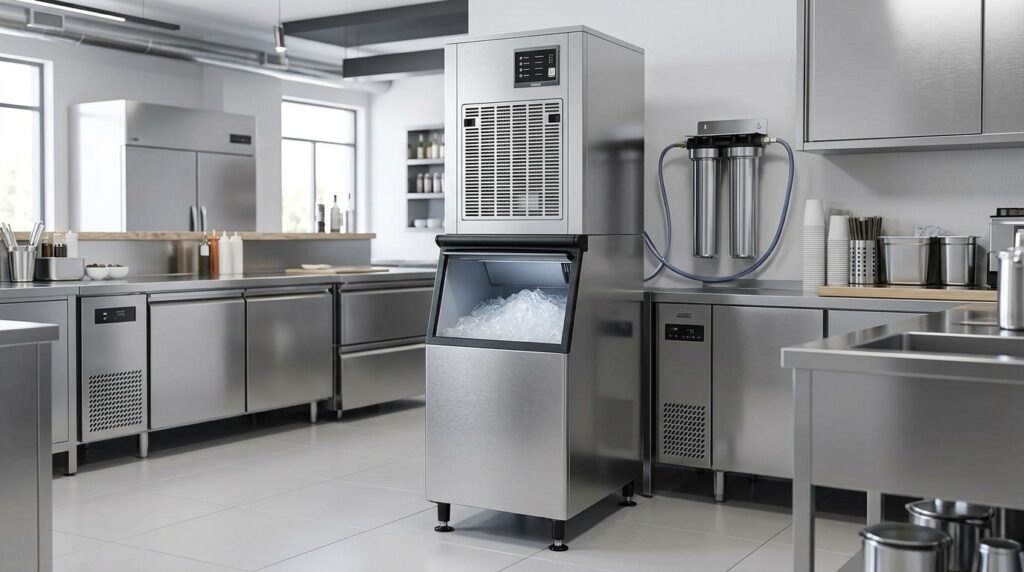
Find Unifrost ice machine manuals, installation guides, and support to keep your machine running smoothly.
Unifrost Ice Machine Manuals, Installation and Support (U165-125, U230-175, U40-15, UB25-15)
If you run a bar, restaurant, hotel, or café, your ice machine is a service-critical piece of kit and the quickest way to avoid downtime is to work from the correct Unifrost ice machine manual for your exact model.
On this page you will find what to download and what to check next, including which manuals and wiring or installation guides apply to popular Unifrost modular and plug-in cube makers like the U165-125, U230-175, U40-15, and UB25-15. You will also see the practical setup checks that protect performance and reduce callouts, such as water supply and drainage, ventilation and levelling, pairing head units with the right bin (for example B175, B275AIB, B375), and completing a first start-up and sanitising routine.
Because water quality is a common cause of limescale issues and premature failures, you will also be guided on when and how to use Unifrost-approved filtration and purifier components like I40002-CN, SA30007, and SA950750 so your installation stays warranty-safe. Finally, you will get a clear split between operator tasks you can do in-house (cleaning schedules, basic checks, simple troubleshooting) and the warning signs that mean it is time to involve a refrigeration engineer.
Introduction to Unifrost Ice Machine Support
If you run a Unifrost ice machine in Ireland, support comes down to three linked basics: the correct manual for your exact model, a proper installation setup (water, drain, ventilation, power), and a written cleaning and filter routine that staff can follow on a busy shift. Ice is treated as a food product in day-to-day hygiene terms, so documentation and records matter for compliance as well as reliability.
A lot of “ice machine faults” are also site problems in disguise, especially water quality and limescale, poor drainage fall, or restricted airflow around the unit.
What support and resources you can access for Unifrost ice machines
On this Unifrost.ie support page, you should expect practical operator resources to keep you trading and reduce avoidable call-outs. In the Unifrost range this typically includes modular cube makers (for example U165-125 / U165-125OG and U230-175 / U230-175OG), plug-in cube makers (for example U40-15 and UB25-15), and matching bins (for example B175, B275AIB, B375). You may also see guidance on Unifrost-approved filtration components used to protect the machine and maintain ice quality (including I40002-CN filter cartridge, SA30007 purifier kit, and SA950750 PP cotton pre-filter cartridges).
The most useful support bundle is usually:
User manuals and installation guidance for the exact model
Start-up and shut-down basics (especially for seasonal sites)
Cleaning and descaling routines, with the right frequency for your water conditions
Troubleshooting checks you can do without tools before you log a service call
The correct filter and purifier components, where required for warranty-safe operation
Why manuals and installation guidance matter more than most people think
With ice machines, small install mistakes typically show up as lower output first, then a breakdown when you can least afford it. Common issues on Irish bar and hotel sites include:
Drainage that backs up during service because the fall is wrong or the line is restricted
A head unit that cannot breathe because it is boxed-in under a counter
Rapid scale build-up on harder water supplies, leading to poor cube formation and longer freeze cycles
From an operator’s point of view, the manual is not just “how to use it”. It is where you confirm the model-specific requirements that affect day-to-day output, cube quality, cleaning chemicals, and what counts as normal operation versus a fault worth escalating.
Food safety and hygiene context for ice in Ireland
In Ireland, ice is part of your food hygiene controls. The FSAI’s catering hygiene guidance covers “water and ice” as a prerequisite and states you should use potable water when making ice. That is why water supply quality, filtration (where used), cleaning, and simple records are part of most HACCP routines, not optional extras (see the FSAI Guide to Good Hygiene Practice).
This is also where the manual earns its keep: it tells you what staff can safely remove for cleaning, what should not be dismantled, and what “sanitised” means for that machine’s materials and food-contact surfaces.
A quick reality check before you start troubleshooting
If the machine is under-producing, making soft or hollow cubes, or you are getting odd tastes and odours, assume a site condition until you can rule it out. Start with:
Water quality and filter condition
Drainage (free-flowing, correct fall, no back-up)
Airflow and ventilation around the unit
Where operators get caught is repeated resets and “nursing it along” through a busy weekend. That can turn a straightforward clean or filter change into a bigger service job.
Once you have the model confirmed, the fastest next step is usually to pull the exact Unifrost manual and installation guide for that unit, then check your on-site setup and routine maintenance against it.
Available Manuals and Guides
What you need depends on your Unifrost ice machine model and whether it’s a modular head unit with a separate bin, or a plug-in undercounter machine. In Ireland, ice is treated as a food, so having the correct operating and cleaning instructions to hand matters for HACCP checks, in line with FSAI guidance on food safety management systems (HACCP).
In practice, “the manual” is often a set of documents. Many machines have separate user instructions, installation requirements and, in some cases, wiring information. Keep the full set together for each unit.
Unifrost ice machine manuals available on this page (by model family)
Use the downloads on Unifrost Ice Machine Manuals, Installation and Support to match the model code on your rating plate and the correct variant (including OG versions where applicable):
Modular cube makers (head units): U165-125 / U165-125OG, U230-175 / U230-175OG
Plug-in cube makers (self-contained): U40-15, UB25-15
Matching ice storage bins: B175, B275AIB, B375
Water filtration and purifier components used with Unifrost ice machines: I40002-CN (main filter cartridge), SA30007 (complete purifier kit), SA950750 (PP cotton pre-filter cartridges)
Installation guides and wiring documents: what to download and why
For most Irish sites, the installation document is what saves time and money later. It covers the non-negotiables that cause call-outs when they’re missed: water feed and drain set-up, ventilation clearance, electrical supply, and any model-specific start-up steps.
If your download set includes a wiring diagram, keep it with the machine records on-site. When you’re in the middle of service and ice production drops, having that diagram to hand speeds up fault-finding for your refrigeration engineer.
Bin pairing and set-up notes (modular heads with separate bins)
With a modular head unit (for example U165-125 or U230-175), the bin is not just “storage”. It affects working height, alignment and day-to-day hygiene.
Keep the bin document alongside the head unit manual so your team can check levelling, lid and baffle placement (where fitted), and the correct cleaning method for the bin interior without damaging any surfaces that come into contact with ice.
Filter and purifier documents (maintenance records in hard-water areas)
In many parts of Ireland, limescale is a common cause of poor performance and unnecessary breakdowns. Keep the filter and purifier documents for I40002-CN, SA30007 and SA950750 with your site records. They help you show consistent maintenance, fit the correct replacement parts, and follow the right flush and cartridge-change steps without guesswork.
These documents are also where you’ll typically find the basics that prevent repeat issues: expected cartridge change intervals, what “normal” water flow looks like, and the signs of a blocked pre-filter versus a machine fault.
Once you’ve saved the right documents for each machine and location, you can build them into a simple site routine that supports HACCP checks and reduces downtime when trade is busy.
Setting Up Your Unifrost Ice Machine
Position the machine first, then sort the correct water feed, drain and power for your model and site. Where filtration is specified, fit it from day one, flush the line, and do an initial clean and sanitise before you serve any ice. Once it’s running, confirm steady production over a few cycles and keep a simple record for HACCP and warranty clarity.
1. Confirm what type of Unifrost unit you’re installing (modular head + bin vs plug-in)
Start by confirming whether you have:
A modular cuber head on a separate bin (for example U165-125 / U165-125OG or U230-175 / U230-175OG on bins such as B175, B275AIB, or B375), or
A plug-in cube maker such as U40-15 or UB25-15.
This matters because modular installs add extra failure points: the head-to-bin mounting, and the bin levelling and drainage. Plug-in units are simpler, but they can struggle if they’re boxed in under a counter with poor airflow.
2. Choose the location based on ventilation, access, and how you actually use ice
Place the machine where staff can scoop ice safely and quickly, without reaching over waste bins, glass racks or handwash sinks. For cocktail-led bars, that often means behind the bar, but you still need clear access to the condenser area for routine cleaning and service.
Avoid tight enclosures and hot spots, especially beside fryers, dishwashers and glasswashers. Restricted airflow and high ambient heat are a reliable way to get slower output and inconsistent cube quality, usually right when the bar is busiest and the room temperature rises.
3. Set up a potable water feed and plan the drain before you connect anything
You need a dedicated cold potable water supply. Treat it as a food-contact input. The principle is straightforward: ice is food, so it must be made from potable water, as referenced in the FSAI Guide to Good Hygiene Practice for the Catering Sector.
For drainage, plan a tidy run that won’t kink, trap or back up. With modular head-and-bin setups, think through both the machine drain and any bin drain arrangement so a blocked gulley or a heavy floor wash can’t force dirty water back towards the unit.
4. Fit Unifrost-approved filtration and flush the line (where most limescale trouble starts)
If your installation specifies filtration, fit it from day one rather than “seeing how it goes”. In hard water areas, skipping filtration commonly leads to scale on key water-contact parts. It often shows up as slower cycles and poor cube quality long before it shows up as an obvious fault.
Where Unifrost-approved filtration is required, use the correct components such as I40002-CN (main filter cartridge), SA30007 (complete purifier kit) and SA950750 (PP cotton pre-filter cartridges). Install filtration where it’s easy to access for cartridge changes, and flush as instructed so you’re not feeding carbon fines or debris into the machine on start-up.
5. For modular units: mount the head to the bin, level everything, and keep the ice path sealed
Don’t rush the physical build. Level the bin first, then mount the head exactly as Unifrost specifies so the ice drop lines up cleanly into the bin without gaps.
A bin that isn’t level can lead to doors not closing properly, uneven ice piling that causes bridging around the chute area, and wear that looks like “a machine issue” but is really installation. Once assembled, refit panels properly so warm air, dust and spillages aren’t being drawn towards the ice zone.
6. First start-up: flush, clean and sanitise, then confirm stable production
Treat start-up like commissioning, even if it’s a plug-in unit. A simple handover checklist helps:
Turn on the water and check every connection for leaks, including filter head fittings.
Confirm the drain is flowing with water running, not just “looks OK”.
Power on and let the unit stabilise, then run any manufacturer-recommended flush cycle (where provided).
Do an initial clean and sanitise of food-contact parts, then discard the first batches of ice.
Observe a few full cycles. Cubes should release cleanly and drop into the bin without splashing, backing up or pooling.
If anything looks off, stop and correct it. Running while starved of water, poorly drained or overheated is how small installation issues become nuisance trips and early callouts.
7. Set boundaries: what staff can do vs what needs a competent technician
Your team can handle day-to-day hygiene and basic checks: keep vents clear, keep the scoop stored hygienically, wipe external surfaces, and report changes in ice quality early.
Leave sealed-system work, internal electrical diagnosis, and any changes to water or drainage to a competent technician. The goal on a busy site is predictable ice and predictable hygiene, not mid-service heroics. Keeping the correct manual to hand makes that a lot easier.
Maintenance and Cleaning Schedules
Set your ice machine up like any other piece of food equipment: clear operator tasks versus engineer tasks, fixed intervals, the same clean–rinse–sanitise method every time, and a quick record for HACCP. Water quality and heat load drive most of the real-world problems in Irish venues, so shorten intervals if you’re seeing scale, slime, odour, cloudy cubes, slow harvests, or repeat call-outs.
1. Use a hygiene-safe method you can repeat
Ice is a food. What tends to catch sites out during inspections is not one missed clean, it’s inconsistent practice: the bin looks fine, but wet internal surfaces, scoops, and handling let contamination build.
Use a simple sequence aligned with the FSAI’s six stages of effective cleaning so staff don’t skip key steps like rinsing or air-drying. Only use cleaning and sanitising chemicals that the ice machine manufacturer states are suitable for food-contact surfaces and compatible with the unit’s materials. General kitchen degreasers can leave residues and can damage plastics and seals.
2. Match the schedule to service volume and water conditions
A busy pub running high-volume mixers needs a tighter routine than a low-footfall café. A hotel breakfast room that sits idle midweek needs a different routine again. Start with this baseline, then tighten it if your water is hard, the area is hot, ventilation is restricted, or the machine has long idle periods.
Daily (operator): Empty and clean the scoop and holder, wipe external touch points, and check the bin lid closes properly. Treat the scoop like a utensil, not a shovel.
Weekly (operator): Empty the bin fully, wash and sanitise the bin interior and any baffles/areas you can safely reach, then air dry before restarting to reduce residual moisture.
Monthly (operator + supervisor): Check air intake and exhaust are clear of dust and stock; confirm the unit is level; confirm the drain is flowing freely with no standing water around the machine.
Quarterly (engineer or trained tech): Deep clean and sanitise internal water-contact components, and check condenser and refrigeration system condition. If you serve cocktails, post-mix, or high volumes of soft drinks, you’ll notice cube quality and recovery time drop off quickly when this slips.
Filter servicing (per site spec): Inspect and replace Unifrost-approved filtration consumables such as I40002-CN, SA30007, and SA950750 in line with your water conditions and the filter kit instructions. Filtration is part of controlling limescale, taste issues, and premature wear.
Keep a simple log beside the machine: date, task, initials, and notes like “scale visible” or “slow fill”. It supports HACCP and gives your engineer something useful to work from.
3. Operator checks that prevent breakdowns
Most “mysterious” failures are basics building up over time: restricted airflow, poor drainage, or water quality.
Your checks should be quick and visual:
Make sure ventilation isn’t being choked by tight joinery, boxes, or hot air from a dishwasher or glasswasher.
Watch drainage: slow draining, gurgling, or water backing up can lead to poor hygiene and stop-start cycling.
Keep an eye on cube quality. Small, hollow, wet, or cloudy cubes often point to scale, restricted water flow, or cleaning intervals that don’t suit your site.
If you’re regularly dumping half-melted ice because the lid is being left open during service, that’s a workflow issue. Fix the handling and you’ll cut waste, reduce running costs, and avoid “watery drink” complaints.
4. What to leave to an engineer (and when to call)
Anything that involves opening panels, electrics, refrigerant-side work, or altering water supply components should be treated as engineer work unless your team is trained and authorised. If you hear abnormal mechanical noise, smell burning, see persistent leaks, or the unit is tripping power, stop and call it in rather than nursing it through service.
For seasonal venues and planned closures, a safe routine is: empty the bin, clean and sanitise fully, and on restart flush the system and discard the first ice produced. The common mistake is switching off a wet machine and leaving stagnant water and damp surfaces inside for weeks. Build a shutdown routine into your site SOP.
Finally, follow the instructions for your exact Unifrost model. Access points and cleaning cycle steps differ between modular heads like U165-125 or U230-175 and plug-in units like U40-15 or UB25-15, and the manual will save time and prevent expensive mistakes.
Common Troubleshooting Tips
Start with the basics: the machine has power, it’s running, water is turned on, and the drain is flowing freely. After that, the two common causes of poor output and bad cubes in Ireland are restricted airflow around the condenser and scale or dirt from untreated water. Stick to the cleaning and sanitising steps in your Unifrost manual. Wrong chemicals or “quick fixes” can create hygiene issues and turn a simple problem into a service call.
1. Confirm the machine can complete a full cycle
Check the obvious, but check it properly: power switch on, isolator on, plug seated, and no tripped breaker. If the unit is on a timer or a controlled socket (common in bar stores), make sure it has power overnight as well as during trading. An ice machine that’s off for half the day will look under-sized the next morning. After a closure or restart, allow time for a few full cycles before judging output.
2. Verify water supply, filtration, and the drain
Confirm the feed water isolating valve is fully open and the water line isn’t kinked or crushed behind the unit. This often happens after cleaning, moving the bin, or squeezing stock in around it.
If you use Unifrost-approved filtration, check whether the cartridge is blocked or due for replacement. Fit the correct parts (I40002-CN cartridge, SA30007 purifier kit, SA950750 pre-filter cartridges) rather than bypassing filtration “to see does it help”. Bypassing usually accelerates limescale build-up and causes more problems at valves and sensors.
Then check the drain: no back-up, no lifting hose creating a trap, and no shared waste point that regularly blocks. A slow or blocked drain can stop harvest and leave wet, clumped ice.
3. Check ventilation and room conditions
Ice machines are sensitive to heat and poor airflow, especially in tight back bars, cellar stairs, and small pantry areas where warm air lingers. Clear dust, cardboard, and bar stock away from air inlets and outlets, and make sure the unit hasn’t been pushed tight to a wall after floor cleaning.
If the room is running hot or the machine is beside a glasswasher or fryer line, expect longer cycles and reduced output until ventilation improves.
4. Check the bin and handling (often the real issue)
If the bin is overfilled or staff are topping up with bags, ice can bridge and give the impression the machine isn’t producing. Make sure the bin door closes properly, the scoop is clean and stored off the ice, and nobody is using a glass as a scoop. Ice is treated as food, so it should be made from potable water and handled hygienically, as set out in FSAI guidance.
5. Match the symptom to a likely cause before changing settings
Small, hollow, or wet cubes usually point to water supply, scale, or a dirty water path rather than “settings”.
Cloudy cubes often come back to water quality or filtration, and can also show the machine is overdue a proper clean and descale.
Slow output with normal-looking cubes usually points to airflow, condenser cleanliness, high ambient temperature, then water flow.
6. Do a safe operator clean, then re-test
Follow your Unifrost manual for the correct clean and sanitise method, and only use chemicals the manual allows. Some cleaners damage plastics, seals, and coatings in the food zone.
Focus on the parts staff affect day to day: bin interior, door seals, scoop holder area, and any washable air filters if fitted. After cleaning, run enough cycles to judge performance properly, and discard the first ice if your procedure requires it.
7. Know when to stop and call an engineer (and what to record)
Stop operator checks and call a refrigeration engineer if you have repeated freezing up, persistent leaks, burning smells, breaker trips, unusual grinding noises, or ongoing short-cycling after the basic checks.
Before you call, note:
The model (for example U165-125, U230-175, U40-15, UB25-15)
Whether it’s a modular head with a separate bin (for example B175, B275AIB, B375) or a plug-in unit
What changed recently (filter change, relocation, closure)
What the ice looks like and how quickly the bin is filling
If you’re unsure which checks are operator-safe on your specific Unifrost unit, work directly from the manual and installation guide for that model.
Understanding When to Seek Professional Help
Most serious ice machine faults sit in the sealed refrigeration system, electrics, or the installed water and drainage services. A well-meaning “quick fix” in any of those areas can turn a recoverable issue into a compressor failure, a leak, or a food safety problem.
In Ireland, refrigerant work is also not a DIY job. The EPA requires anyone handling F-gases to be appropriately certified, so sealed-system work should always go to a qualified engineer (EPA guidance).
The catch is that plenty of “not making enough ice” complaints are caused by basics: poor airflow, low water flow, scale, or hygiene. Good site checks often get you back to normal output without parts or downtime.
What your team can safely do in-house (and should)
For bars, cafés, hotels and takeaways, the best wins are the unglamorous ones: cleaning, airflow and water quality. Tasks that are usually safe for trained staff include:
Clean and sanitise the machine to the manufacturer’s method.
Keep the bin and scoop hygienic and stored properly.
Check the unit is level.
Make sure the condenser air path is clear (no boxes tight to the vents, no dust matting on the grille).
Confirm the water supply is on, the isolation valve is open, and there are no kinks or pinched lines.
Water filters are a good example of “in-house but disciplined”. If you are using Unifrost-approved filtration components (for example I40002-CN, SA30007, SA950750), replacement is typically an operator task, but only if you follow the manual steps to shut off, depressurise and flush. Record the change date for your HACCP file. A rushed filter change can cause low flow, poor cube formation, or leaks that look like a machine fault.
What needs a refrigeration engineer or qualified tradesperson
Use this as the hard line: if the issue involves refrigerant, internal electrics, or changes to building services, stop and call a professional. In practice, that includes:
Sealed-system or control issues: suspected refrigerant leak, repeated tripping, burning smells, dead display or non-responsive controls, unusual mechanical noise, or short-cycling that continues after cleaning and airflow checks.
Water and drainage faults you cannot isolate quickly: persistent leaks, drain backing up, drain routing that needs to be altered, or any sign of backflow risk.
Ongoing output problems after basic checks: the unit is clean, ventilated, and correctly supplied with water, but still makes small, hollow, wet, or inconsistent ice over multiple cycles.
Anything requiring deeper access or setting changes: panels off beyond routine cleaning access, or adjustments that affect freeze and harvest timing on modular head units like U165-125 / U165-125OG and U230-175 / U230-175OG, or plug-in units like U40-15 and UB25-15.
A practical on-site rule is: if you cannot keep the ice demonstrably food-safe while you troubleshoot, stop making and serving it. Ice counts as food and needs hygienic handling as part of good hygiene practice, including “water and ice” controls (FSAI guide).
Signs you should stop using the ice immediately
If the ice is visibly dirty, smells odd, tastes chemical, or you see slime or mould inside the bin or on internal surfaces, treat it as a food safety issue, not a performance issue. Empty the bin, isolate the machine, and only restart after a full clean and sanitise to the manual. Running out of ice is painful. Serving questionable ice is worse.
If contamination keeps returning, you are seeing heavy scale, or cubes are persistently cloudy or soft, escalate early. The root cause is often water quality, filtration setup, or an installation problem that will keep repeating until it is corrected.
How to make the engineer visit quicker and cheaper
Engineers diagnose faster with site facts rather than symptoms. Note:
The model number.
Whether it is a modular head with a separate bin (for example paired with B175, B275AIB, or B375) or a self-contained unit.
What changed before the fault (filter change, relocation, cleaning chemical, building works).
Whether the problem is constant or mainly during service peaks or hot weather.
For warranty-safe steps, work from the manuals and installation guides for your exact Unifrost model and approved filter kit, not guesswork or generic “how-to” videos.
Linking Your Ice Machine with Unifrost’s Ecosystem
How you set up an ice machine depends on what it is doing for you: supporting bar service, feeding kitchen production, or acting as a customer-facing product. In Ireland, ice also needs to be treated as a food, with controls for water/ice, hygiene and cleaning routines expected under HACCP. The FSAI Guide to Good Hygiene Practice is a solid reference point, particularly the “Water and ice” and “Cleaning” sections (FSAI guide PDF).
What changes from site to site is usually the pressure point: peak drink service, staff handling, water quality and limescale, or the practical reality of giving the unit enough ventilation and a proper drain.
How an ice machine behaves like part of your cold chain, not a standalone box
In a busy Irish bar, ice is a service-critical ingredient. When production drops, it shows up immediately at the pass. You slow down, you start reaching for bagged ice, and you introduce extra handling at exactly the wrong time.
Thinking in “ecosystem” terms keeps the focus on the outcome, not just the head unit. The reliable setup is a combination of:
the right ice type for your drinks
enough storage to buffer peaks
sensible water treatment for your local supply
a cleaning routine your team can actually maintain
If you already run Unifrost refrigeration across the site, the same discipline applies here: keep airflow clear, keep condensers clean, and avoid “temporary” placement that blocks ventilation or makes cleaning awkward. Ice machines are often less forgiving than fridges because they cycle constantly and depend on stable water conditions.
Where the Unifrost ice range fits: modular heads, plug-in units, and matching bins
Within the Unifrost range, you are typically choosing between:
Modular cube makers on a dedicated storage bin for higher volume and better resilience during peaks.
Smaller plug-in cube makers for undercounter or back-bar use where footprint and point-of-use matter most.
With modular units, matching the head to the correct bin matters. Head units such as U165-125 / U165-125OG and U230-175 / U230-175OG are designed to pair with storage bins including B175, B275AIB, and B375, giving you both production capacity and buffer storage without improvised setups.
Plug-in models such as U40-15 and UB25-15 tend to suit tighter spaces and lower daily draw, or where you want ice right beside the service station. The trade-off is limited storage. If production dips or the bar runs hot, you feel it faster, and you have less “buffer” to carry you through a rush.
The hidden ecosystem piece: water filtration, limescale control, and warranty-safe practice
In many Irish locations, water quality is what determines how much attention an ice machine needs, particularly in hard-water areas where scale builds quickly. Filtration and purifier components like I40002-CN (main filter cartridge), SA30007 (complete purifier kit), and SA950750 (PP cotton pre-filter cartridges) should be treated as part of the install, not optional extras.
From an operator’s point of view, this is about reducing scale-related callouts and keeping maintenance predictable. It also helps with consistency, where poor water quality can show up as off-taste, cloudy ice, or softer cubes.
What “ecosystem thinking” looks like day-to-day on site
You will get better results if the ice machine has clear ownership, rather than “belonging to the bar” until it stops working. In practice:
Assign responsibility for daily hygiene and scheduled cleaning, and decide who records it for HACCP.
Keep the install serviceable: access for cleaning, clear ventilation, and a drain arrangement that will not back up on a Saturday night.
Manage consumables (especially filter cartridges) on a set rhythm, so you do not drift into “one more month” until the machine forces the issue.
For a predictable setup, rely on the model-specific installation and user manuals and the correct guidance for filter setup and replacement. That is where you should start before deciding location, drainage, and maintenance routines.
Frequently asked questions about Unifrost ice machine support
How can I get a Unifrost ice machine manual?
For a Unifrost ice machine manual, start with the model number on the rating plate (for example U165-125 / U165-125OG, U230-175 / U230-175OG, U40-15, or UB25-15) and the serial number.
Check the documentation pack that shipped with the machine (often includes user instructions plus installation notes).
If you need a PDF copy, request it from your equipment supplier with the model + serial so you get the correct revision.
If you are missing wiring/installation pages, ask specifically for the installation guide and any service/parts documentation relevant to your exact model.
What are the installation requirements for Unifrost ice machines?
Installation requirements vary slightly between modular heads with a separate bin (for example U165-125 or U230-175 paired with bins like B175, B275AIB, B375) and plug-in/self-contained cube makers (for example U40-15 or UB25-15). In all cases, plan for:
Water feed: A dedicated cold-water supply with an isolating valve that is easy to reach.
Drainage: A suitable drain point for meltwater and purge water. Avoid long runs that can back up or freeze.
Ventilation: Keep air vents and grille areas clear, and do not box the unit in. Poor airflow is a common cause of low output and breakdowns.
Power: Correct electrical supply and safe access to an isolator. Avoid extension leads in commercial environments.
Water filtration (strongly recommended): In hard-water areas, fit an approved filter/purifier to reduce limescale and protect internal components. In the Unifrost ecosystem this includes items such as I40002-CN (main filter cartridge), SA30007 (complete purifier kit), and SA950750 (PP cotton pre-filter cartridges). Filtration is also a practical step for hygiene and warranty-safe operation.
If you are unsure whether your site needs extra clearance, pump drainage, or filtration staging, get a refrigeration engineer to review the installation plan before delivery.
How do I clean my Unifrost ice machine?
Use the cleaning method and chemicals specified in your model’s manual, and avoid household cleaners that can taint ice or damage plastics.
A practical routine that suits most commercial sites:
Empty the bin and discard ice before cleaning.
Switch to clean/service mode (if your model has it) or power down safely.
Descale the water system using a proper ice-machine descaler, then run the required flush/rinse cycles.
Sanitise food-contact surfaces (bin interior, curtain/flap, scoop holder, and accessible ice path) with a food-safe sanitiser.
Clean airflow components: wipe dust from grilles and clean any removable air filter if fitted.
Final rinse and restart: confirm the first batch is clear and odour-free.
Operational tip: keep a dedicated, clean ice scoop and never store it in the ice itself. This reduces contamination risk and callouts for “dirty ice” complaints.
Why isn’t my Unifrost ice machine producing enough ice?
Low ice output is usually caused by site conditions or maintenance issues rather than a failed machine. Check these in order:
Bin full or sensor blocked: If the bin is full, the machine may stop making ice. Also check the curtain/flap is closing freely.
Poor ventilation or high room temperature: Heat or restricted airflow can dramatically reduce production. Clear obstructions and clean dusty intake areas.
Dirty condenser/air path: A dusty condenser area causes slow cycles and warm running. Clean as per the manual.
Water supply issues: Low flow, a partially closed valve, or a kinked hose reduces fill and can shorten cycles.
Limescale or filter restrictions: Scale buildup and clogged filters reduce efficiency. If a purifier kit is installed (for example SA30007 with cartridges like I40002-CN or SA950750), confirm cartridges are in date and replaced on schedule.
Recently installed: New installs often need thorough flushing and an initial sanitise cycle before stable output.
If basic checks do not restore output, stop repeated resets and book service. Running an iced-up or overheating machine can turn a small issue into an expensive repair.
What are the signs my ice machine needs repairs?
Arrange professional service if you notice any of the following:
Repeated low output after cleaning and confirming good water supply and ventilation.
Soft, wet, hollow, or misshapen cubes that persist across multiple cycles.
Unusual noises (grinding, squealing), excessive vibration, or fans not running normally.
Water leaks around the unit, bin, or drain connection.
Bad smells or visible slime returning quickly after sanitising, suggesting an internal hygiene issue or stagnant water.
Frequent stopping or error indications that keep coming back.
Operator-safe actions are usually limited to cleaning, filter changes, and basic visual checks. Anything involving sealed refrigeration components, electrics, or internal adjustments should be handled by a qualified refrigeration engineer.
Next step: match the right Unifrost ice setup to your site
If you are choosing between a plug-in cube maker (like U40-15 or UB25-15) and a modular head plus bin (like U165-125 / U230-175 with B175, B275AIB, or B375), make a quick list of your daily ice demand, where the unit will vent, and whether you need filtration from day one.
To compare options and then get practical, site-specific advice (including filtration and bin pairing), browse Caterboss’s Ice Makers category.
Related Unifrost guides
Compare models, maintenance advice and support information related to this topic.
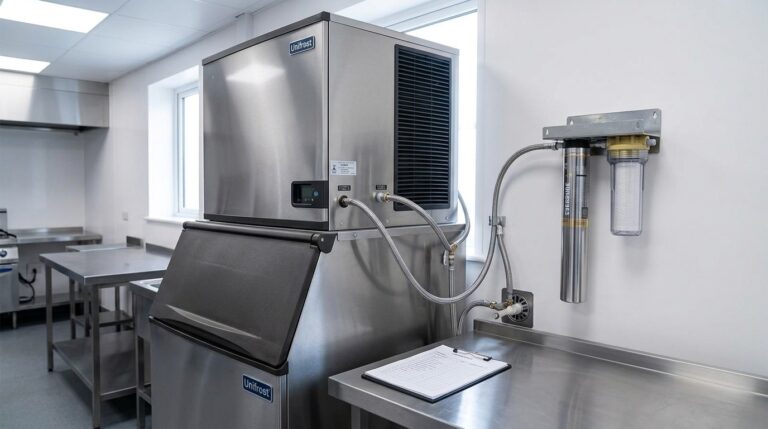
Unifrost Ice Machine, Bin, and Water Filter Setup: A Checklist for New Irish Installations
Discover step-by-step guidance for setting up Unifrost ice machines, bins, and filters in Irish commercial sites.
Read guideView Unifrost ice machines at Caterboss
For current product options, pricing and availability, continue to Caterboss.